
Lottery is a well-known number-based game at PHJOIN that combines simple participation rules with the excitement of waiting for a random draw. From traditional paper tickets to modern digital interfaces, lottery games have evolved to offer different number-selection formats, draw schedules, result displays, and prize structures.
In 2026, players researching online Lottery games often want more than a basic explanation. They need to understand how the game works, how to choose valid numbers, how winning combinations are determined, and what to check before entering a draw. A clear understanding of these details can help beginners avoid common mistakes and make more informed decisions.
This comprehensive Lottery game review examines the fundamental mechanics, common game variations, advantages, limitations, and practical considerations of number-based lottery games. It is designed for readers who want to learn the rules before participating, whether they are exploring a traditional lottery or an online version.
One important point should always remain clear: Lottery outcomes are based on chance, and no number-selection technique can guarantee a win. The most useful approach is to understand the rules, establish a spending limit, and treat participation as entertainment rather than a reliable source of income.
2. What Is Lottery and How Does It Work?
Lottery is a game in which participants select numbers or enter number combinations and compare their selections with the official results of a draw. The exact mechanics depend on the lottery format, provider, and applicable rules.
In a conventional number lottery, a player selects a specified quantity of numbers from an available range. The draw then produces a winning combination. Depending on the rules, matching all selected numbers may qualify for a top prize, while partial matches may qualify for smaller prizes or no prize at all.
Online Lottery games can present this process through a digital interface. Players may see number grids, entry confirmation screens, countdowns, published results, and prize information. Some formats provide automatic number selection, while others allow manual choices.
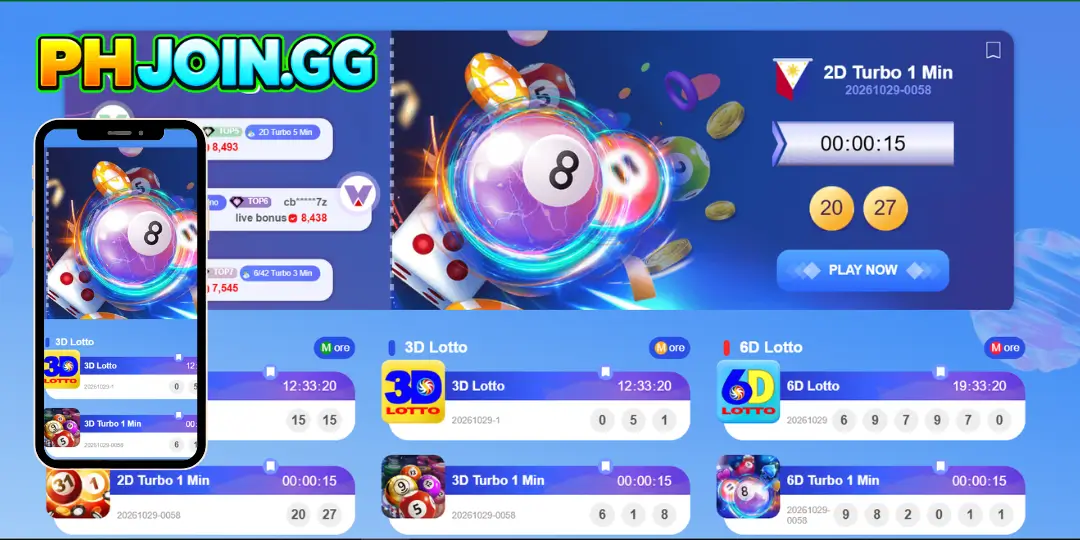
Although the interface may look different from one provider to another, most number-based lotteries share several fundamental elements:
- Number range: The available numbers from which selections can be made.
- Entry format: The number of selections required for a valid entry.
- Draw schedule: The designated date and time when results are determined.
- Winning combination: The official numbers produced by the draw.
- Prize categories: The conditions that determine whether a matching entry qualifies for a prize.
- Entry cost: The amount charged for a ticket or participation, where applicable.
Understanding these elements is essential because two games labeled Lottery may have completely different rules. Always consult the specific game’s instructions rather than assuming that one format applies everywhere.
3. Main Features of Online Lottery Games
Online Lottery games may include a variety of features intended to make number selection and result checking easier.
Flexible Number Selection
Depending on the format, players may choose numbers manually or use a quick-pick feature that generates a random combination. Manual selection offers personal preference, while automatic selection can save time. Neither option provides a guaranteed advantage in a fair, properly randomized draw.
Different Lottery Formats
Some games require matching a complete set of numbers, while others use multiple number groups, special numbers, or separate prize tiers. The number of selections and the matching conditions determine the difficulty of qualifying for different prizes.
Scheduled Draws and Result History
A published draw schedule helps participants understand when results are expected. Some providers also display previous results, allowing users to review historical information. However, past outcomes should not be interpreted as reliable predictions of future independent draws.
Digital Accessibility
Many online lottery interfaces are designed for desktop computers and mobile devices. Depending on the provider, users may be able to select numbers, review entries, and check results through a browser or compatible application.
Prize Information
A clear prize table should explain the qualifying combinations, prize amounts or calculation methods, claim deadlines, and any applicable restrictions. Players should read these conditions before participating rather than relying on promotional headlines.
4. Lottery Game Information Table
The following table provides a practical overview of common lottery characteristics.
| Feature | Detailed Explanation |
|---|---|
| Game category | Number-based lottery |
| Main objective | Match selected numbers with official draw results |
| Number selection | Manual selection or automatic quick-pick, where available |
| Draw frequency | Determined by the individual provider |
| Winning conditions | Depend on the required matching combinations |
| Prize structure | May include multiple prize tiers |
| Game difficulty | Varies according to the number range and selection rules |
| Device compatibility | Desktop or mobile, depending on the service |
| Result verification | Official published results and entry records |
| Main risk | Uncertain outcomes and potential financial loss |
| Best beginner approach | Learn the rules, start cautiously, and establish a firm budget |
This table describes general lottery mechanics. It does not establish the actual specifications, payout rates, or features of any particular game.
5. How to Play Lottery: A Complete Beginner’s Guide
For first-time players, following a clear process can reduce confusion and help prevent avoidable mistakes.
Step 1: Choose the Correct Lottery Format
Begin by reviewing the available lottery options. Determine whether the game uses a single number pool, several number groups, special numbers, or another format.
Check the number range and how many selections are required. For example, one hypothetical game might require five numbers from a pool of 1–40, while another might use a different range and additional special numbers. These are illustrative examples, not specifications for every Lottery game.
Step 2: Understand the Rules and Entry Conditions
Before selecting numbers, read the official instructions carefully. Confirm the entry cost, minimum participation requirements, draw schedule, winning combinations, prize tiers, and any restrictions.
For paid games, also review the payment policies, eligibility rules, and claim procedures. Never assume that all entries qualify for the same prizes or that promotional terms apply automatically.
Step 3: Select Your Numbers
Choose a valid combination using the selection interface. If automatic number generation is available, you can use it instead of choosing numbers manually.
Some players prefer birthdays, memorable dates, or personally meaningful numbers. These choices may make an entry more memorable, but they do not make the combination more likely to be drawn in a fair lottery.
Step 4: Review and Confirm Your Entry
Before confirming a paid entry, check every selected number and verify the total cost. Make sure you understand the draw date and whether your entry is valid for the intended draw.
Keep the confirmation details or ticket reference where appropriate. Do not share account passwords, payment credentials, or sensitive verification information with other people.
Step 5: Wait for the Official Draw
Allow the draw to take place according to the published schedule. Avoid relying on rumors, unofficial predictions, or claims that someone has discovered a guaranteed winning formula.
The official results should be the reference point for determining whether your entry matches a winning combination.
Step 6: Check Your Results
Compare your numbers with the published winning numbers. Read the matching rules carefully because the order of the numbers, special-number requirements, and prize categories can differ between games.
A partial match does not automatically qualify for a prize. Confirm the exact conditions stated in the official rules.
Step 7: Understand the Prize Claim Process
If your entry qualifies for a prize, follow the provider’s official claim instructions. Check the claim deadline, identification requirements, eligibility conditions, and any applicable deductions or fees.
Never pay an unverified person who promises to release a prize. Verify any unexpected prize notification independently through official channels.
Step 8: Review Your Spending
After participating, compare your actual spending with your predetermined budget. Do not increase your stake to recover losses, and never use money intended for rent, food, education, bills, or other essential expenses.
A successful beginner experience starts with understanding the risks, not with chasing a particular result.
6. Lottery Number Selection: Facts Versus Common Myths
Number selection is one of the most discussed aspects of Lottery games. Understanding probability helps separate reasonable expectations from misleading claims.
Myth 1: Numbers That Have Not Appeared Recently Are Due
In a properly randomized and independent draw, a number does not become more likely to appear simply because it has been absent from recent results. Each draw must be evaluated according to the game’s actual probability model.
Myth 2: Lucky Numbers Guarantee Better Results
Choosing favorite numbers can make the experience more personal, but personal significance does not create a mathematical advantage in a fair draw.
Myth 3: Historical Results Reveal the Next Winning Combination
Historical data can describe what happened in previous draws. It cannot reliably predict the outcome of a future independent draw.
Myth 4: Buying More Entries Guarantees a Prize
Additional distinct entries may increase the chance of matching a winning combination in some lottery formats, but they also increase the cost. They do not guarantee a win, and the additional expense may outweigh the potential benefit.
The practical lesson is simple: use probability to understand uncertainty, not to convince yourself that a win can be predicted.
7. Advantages and Disadvantages of Lottery Games
Lottery offers a straightforward format, but beginners should consider both its appeal and its limitations.
| Advantages | Disadvantages |
|---|---|
| Basic rules are often easy to learn | Winning outcomes are uncertain |
| Different formats may be available | Rules can vary considerably |
| Results may be easy to check online | Incorrect or unofficial results can cause confusion |
| Manual and automatic selection may be offered | No selection method guarantees a win |
| Short entry processes can be convenient | Repeated paid entries can accumulate costs |
| Different prize categories may be available | Eligibility and claim conditions may be complex |
The main advantage is accessibility. The main limitation is uncertainty. A good review should explain both instead of presenting lottery participation as an easy way to make money.
8. Responsible Lottery Tips for Beginners in 2026
Responsible participation should be part of every complete Lottery guide.
Set a fixed budget. Decide on an affordable entertainment limit before participating and stop when you reach it.
Keep expectations realistic. Treat every paid entry as money you may lose, not as an investment or expected source of income.
Avoid chasing losses. Previous losses do not make a future winning combination more likely.
Protect your personal information. Use strong passwords, secure connections, and verified payment channels. Be cautious of messages promising guaranteed prizes.
Verify the provider. Research licensing, ownership information, customer support, privacy policies, and applicable local laws before using an online service.
Take breaks when necessary. If participation becomes stressful, interferes with daily responsibilities, or feels difficult to control, stop and seek appropriate support.
Players should also check the legal age and jurisdictional requirements that apply where they live. Lottery and online gambling laws vary by location.
9. Exploring Online Lottery Platforms
When evaluating an online Lottery service, look beyond the visual design. A professional-looking interface alone does not establish that a provider is trustworthy.
Review the availability of clear game rules, transparent prize conditions, accessible customer support, understandable payment policies, and reliable result verification. Check whether the service explains how personal information is handled and whether its activities are legally permitted in your jurisdiction.
PHJON is one platform name users may encounter when exploring Lottery-style gaming options. Before using it, independently verify its current game availability, licensing or regulatory status, applicable terms, payment conditions, and eligibility requirements. Do not assume that a platform provides a particular game or feature without confirming the current information directly.
A careful review of these details is more valuable than relying solely on advertisements or promotional claims.
10. Frequently Asked Questions About Lottery
Is Lottery suitable for beginners?
Many basic number-selection games are easy to understand. Beginners should still learn the number range, matching requirements, draw schedule, and prize conditions before participating.
Can I predict the winning Lottery numbers?
No reliable method can guarantee the winning numbers of a properly randomized lottery. Number patterns and historical results do not provide certainty about future draws.
Is automatic number selection better than choosing numbers manually?
Neither method guarantees a better outcome when each valid combination has the same probability of winning. The choice is primarily a matter of convenience and personal preference.
How can I check whether my Lottery entry has won?
Compare your entry with the official results and review the prize conditions for the exact game and draw. Keep your entry confirmation and follow the official claim instructions if applicable.
Are all online Lottery games the same?
No. Games can differ in their number ranges, entry requirements, draw frequency, prize structures, and eligibility rules. Read the specific rules for each game.
Can Lottery be used as a regular source of income?
Lottery should not be treated as a reliable source of income. Outcomes are uncertain, and paid participation can result in financial losses.
11. Final Verdict: Is Lottery Worth Exploring in 2026?
Lottery remains an accessible option for people interested in number-selection games and the suspense of random draws. Its straightforward mechanics can make it easy for beginners to understand, while different formats offer varying rules and prize structures.
The best way to evaluate a Lottery game is to examine its instructions, number-selection system, draw schedule, prize conditions, accessibility, and transparency. These details help users understand what the game offers without relying on exaggerated promises.
