

Sportbook, more commonly spelled at PHJOIN, is an online sports entertainment format that allows users to explore sporting events, review betting odds, and predict possible match outcomes. As digital technology continues to evolve, Sportsbook platforms increasingly focus on user-friendly interfaces, real-time information, mobile compatibility, and convenient access to sports statistics.
Sportsbook is associated with a wide range of sporting events, including football, basketball, tennis, volleyball, baseball, and other competitions, depending on the provider. For sports enthusiasts, it offers an opportunity to follow their favorite teams while learning about match statistics, performance trends, and different prediction markets.
In 2026, important trends in online Sportsbook experiences include mobile-first design, clearer market information, faster data updates, and improved account security. However, available features vary between operators, and not every platform provides the same sports, betting options, or live statistics.
This comprehensive Sportbook review explains the main features, common betting markets, advantages, disadvantages, and essential information beginners should understand before using a platform. It also highlights responsible participation, helping readers make informed decisions rather than treating sports betting as a guaranteed way to earn money.
2. Sportbook Overview: Essential Information
The following table summarizes the general characteristics of Sportsbook services.
| Category | Detailed Information |
|---|---|
| Product name | Sportbook / Sportsbook |
| Main category | Online sports prediction and betting |
| Popular sports | Football, basketball, tennis, volleyball, baseball |
| Access methods | Desktop, smartphone, and tablet, depending on the provider |
| Common markets | Match winner, handicap, over/under, accumulator |
| Live betting | Available on selected platforms |
| Key information | Odds, fixtures, scores, and statistics |
| Useful skills | Sports knowledge, probability awareness, and risk management |
| Target audience | Adults who meet local legal requirements |
| Main risk | Financial loss and unpredictable sporting outcomes |
This table describes common Sportsbook characteristics. It does not confirm that every feature is available on a specific operator or website.
3. Key Features of Sportbook in 2026
3.1. A Wide Selection of Sporting Events
One of the most recognizable features of Sportsbook platforms is their variety of sporting competitions. Depending on the operator, users may find domestic leagues, international tournaments, club competitions, and individual sporting events.
Football is particularly popular because matches generate extensive statistics, including possession, shots on target, goals scored, defensive performance, and head-to-head records. Basketball offers another analytical experience through points, rebounds, assists, and team scoring averages.
Tennis and volleyball introduce different scoring systems and match formats, allowing users to explore sports with distinct rules and performance indicators.
For beginners, concentrating on one familiar sport is often more manageable than exploring multiple unfamiliar competitions. Understanding the rules and context of a match is more valuable than making predictions based on team names or popularity alone.
3.2. Sports Betting Odds and Match Information
Odds are a fundamental component of Sportsbook. They indicate the potential payout associated with a selection under specified settlement rules.
Decimal odds are commonly used in many markets. For example, decimal odds of 2.00 indicate a total return of PHP 200 for a PHP 100 stake if the selection wins, including the original stake. The potential profit would be PHP 100, before any applicable fees or other adjustments.
Odds also reflect market assessments and may incorporate the operator’s margin. They should not be interpreted as a guarantee of an outcome.
Some platforms display additional information, such as recent results, team rankings, injury reports, and historical statistics. These details can help users understand a sporting event, although statistics cannot eliminate uncertainty or predict every result accurately.
3.3. Live Scores and In-Play Markets
Selected Sportsbook services provide live scores and markets while a match is underway. Depending on the sport, users may see updated scores, match time, possession, player statistics, or other performance indicators.
Live betting can be particularly unpredictable because odds may change rapidly following goals, injuries, penalties, red cards, or other significant events.
Beginners should understand that live data can be delayed and that a displayed score may not update instantaneously. Fast-moving markets should never create pressure to make rushed financial decisions.
3.4. Mobile-Friendly Access
Mobile compatibility is another important consideration in 2026. A well-designed interface may organize competitions, display odds clearly, and allow users to review account information on smartphones or tablets.
Before using any platform, check whether its official website or application is secure and compatible with your device. Avoid unofficial downloads, suspicious links, and applications requesting unnecessary permissions.
Account protection should also be a priority. Strong passwords, two-factor authentication where available, and careful handling of personal information can help reduce security risks.
4. Popular Types of Sportsbook Betting Markets
Understanding market terminology is essential before interpreting any Sportsbook interface. The following are common examples, although availability and settlement rules differ by provider.
4.1. Match Winner or Moneyline
A match-winner market allows users to select the team or competitor expected to win. Depending on the sport and market, a draw may be possible or excluded.
For example, a football match may offer separate selections for a home win, a draw, and an away win. In other sports, the market may offer only two competitors.
Always check whether the market covers regular time, extra time, or the final result under the operator’s rules.
4.2. Handicap or Point Spread
Handicap markets apply a specified advantage or disadvantage to a team or competitor for settlement purposes.
In football, a team might be listed with a handicap of -1.0 goal. The settlement depends on the adjusted score and the precise handicap rules. Some handicap formats allow a stake to be returned under particular outcomes, while others use different settlement methods.
Beginners should learn the difference between Asian handicap, European handicap, and point spread rather than assuming that all handicap markets work identically.
4.3. Over/Under Markets
Over/under markets involve predicting whether a specified statistic will finish above or below a given line.
For example, a football market may use a total of 2.5 goals. An over selection wins if the match produces at least three goals, while an under selection wins if the total is zero, one, or two goals, assuming the market follows standard full-match settlement rules.
Similar markets may apply to basketball points, tennis games, or other statistical measures.
4.4. Accumulator or Parlay Bets
An accumulator combines multiple selections into one bet. The potential return can increase when several selections are combined, but the risk also increases because more outcomes must satisfy the ticket’s settlement conditions.
In a typical all-to-win accumulator, one losing selection causes the entire ticket to lose. Some operators offer special settlement rules or partial-win structures, so the terms should always be checked.
Accumulators are not a shortcut to reliable profits, and beginners should understand each individual market before considering combined selections.
4.5. Live Betting
Live betting allows selections to be made during an ongoing sporting event when the relevant market is available.
Although it may appear exciting, in-play betting can encourage impulsive decisions because prices and match conditions change quickly. A disciplined approach means avoiding rushed choices, respecting predetermined limits, and accepting that an unexpected event can change the result immediately.
5. Step-by-Step Sportbook Guide for Beginners
Learning how Sportsbook works should begin with understanding the platform, its terminology, and the risks involved.
Step 1: Verify the platform and local regulations.
Check the operator’s identity, licensing information, terms of service, privacy policy, and age requirements. Confirm that the service is legally available in your jurisdiction before creating an account or participating.
Step 2: Explore the interface.
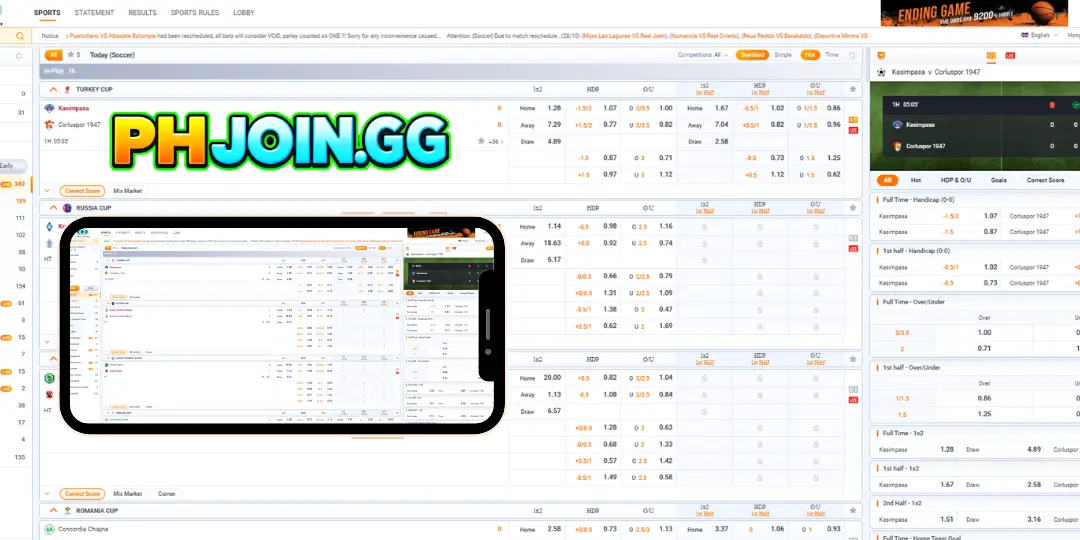
Locate the sports categories, competition lists, event schedules, odds display, and market explanations. If a free demonstration or simulated mode is available, use it to learn the interface without risking real money.
Step 3: Learn the rules of your chosen sport.
Understand how matches are scored, how draws work, and what events may affect the final result. Familiarity with the sport provides context for interpreting statistics and market terminology.
Step 4: Understand the odds format.
Learn how decimal odds, potential returns, and settlement conditions work. Never assume that a higher displayed number automatically means a better opportunity or a greater chance of winning.
Step 5: Review available statistics critically.
Recent performance, home and away records, injuries, suspensions, and head-to-head results can provide context. Nevertheless, historical data does not guarantee future performance, and small samples can be misleading.
Step 6: Establish financial boundaries.
If participation is legal and appropriate, set a strict entertainment budget using only money you can afford to lose. Never use rent, food, tuition, emergency savings, borrowed funds, or money intended for essential expenses.
Step 7: Review outcomes without chasing losses.
Keep track of your activity and recognize that both wins and losses occur. Do not increase stakes to recover previous losses or interpret a winning streak as proof that future results are predictable.
Users who want to explore a Sportsbook category may review the relevant section on PHJON, but they should independently verify the platform’s legitimacy, local legal status, terms, and whether a genuine free-play mode is offered. No specific demo feature or service condition should be assumed without confirmation.
6. Advantages and Disadvantages of Sportbook
Advantages
Multiple sports in one place: Depending on the provider, users can explore different competitions through a single interface.
Access to sports information: Fixtures, scores, rankings, and performance statistics can make it easier to follow sporting events.
Different market formats: Match-winner, handicap, and over/under markets offer different ways to understand sports prediction.
Convenient device access: Supported websites and applications may provide access through smartphones, tablets, and desktop computers.
Opportunities to develop sports knowledge: Reviewing match rules and statistics can encourage a deeper understanding of sporting competitions.
Disadvantages
Unpredictable results: Even well-performing teams can lose because of injuries, tactical changes, mistakes, or unexpected events.
Financial risk: Real-money betting can result in the loss of the entire stake.
Rapidly changing odds: Market prices may change significantly before or during a match.
Potential for impulsive decisions: Live markets and accumulator bets may encourage users to make choices without sufficient consideration.
Differences between operators: Features, fees, settlement rules, account restrictions, and withdrawal policies vary across platforms.
7. Practical Sportbook Tips and Responsible Participation
A sensible approach to Sportsbook starts with realistic expectations. No betting system, statistical model, or prediction method can guarantee consistent wins.
First, distinguish facts from opinions. A team’s recent victories may be useful information, but they do not automatically mean the team will win its next match. Consider the quality of opponents, competition conditions, and limitations of available statistics.
Second, understand implied probability. With decimal odds, a simple implied-probability calculation is:
Implied probability = 1 ÷ decimal odds × 100%
For odds of 2.00, the implied probability is 50%. This is a basic mathematical conversion, not an independent assessment of the true probability. The operator’s margin and market structure can affect how odds relate to actual probabilities.
Third, establish clear boundaries. Decide in advance how much time and money you are willing to spend, and stop when those limits are reached. Never chase losses or treat betting as a solution to financial difficulties.
Finally, protect your personal information and verify the operator before sharing documents or financial details. If participation becomes difficult to control or starts affecting relationships, work, studies, or finances, stop and seek appropriate support.
Responsible participation means recognizing that Sportsbook involves uncertainty and that choosing not to bet is always a valid option.
8. Frequently Asked Questions About Sportbook
Is Sportbook suitable for beginners?
Beginners can learn the terminology, scoring rules, odds formats, and market conditions. Free educational resources or simulated modes, when available, are preferable for learning without financial exposure.
Does a higher betting odd mean a higher chance of winning?
No. Higher odds generally correspond to a lower implied probability within a comparable market, although odds also reflect the operator’s pricing and margin. They do not guarantee a particular outcome.
Can Sportsbook be accessed on a mobile phone?
Many providers support mobile browsing or dedicated applications, but availability depends on the operator and location. Always use official channels and check device security.
What is the difference between pre-match and live betting?
Pre-match markets are available before an event starts, while live markets operate during the event when offered. Live odds may change rapidly as match conditions develop.
Is Sportsbook a reliable way to earn money?
No. Sports betting carries a genuine risk of financial loss and should not be treated as a stable source of income or a substitute for employment, savings, or financial planning.
What should users check before choosing a Sportsbook platform?
Review licensing, legal availability, account security, privacy protections, market rules, payment conditions, withdrawal terms, and customer support. Avoid operators whose identity or terms cannot be independently verified.
9. Final Verdict: Is Sportbook Worth Exploring in 2026?
Sportbook remains a recognizable form of sports-related online entertainment, combining sporting events, statistical information, odds, and prediction markets. Its appeal comes from the variety of available competitions, the convenience of digital access, and the opportunity to learn more about sports.
However, a positive user experience depends on more than an attractive interface or a large selection of events. Transparency, account security, clear settlement rules, and compliance with local regulations are equally important.
For beginners, the best starting point is education: learn the rules, understand odds, review statistics carefully, and recognize the limits of prediction. Free simulations can be useful when genuinely available, while real-money participation requires strict financial boundaries and a willingness to accept losses.
Overall, Sportbook is best approached as a high-risk form of entertainment rather than a guaranteed earning opportunity. In 2026, informed decisions, responsible behavior, and careful platform verification remain more important than any prediction strategy or promotional offer.
